
Rethinking Prosperity
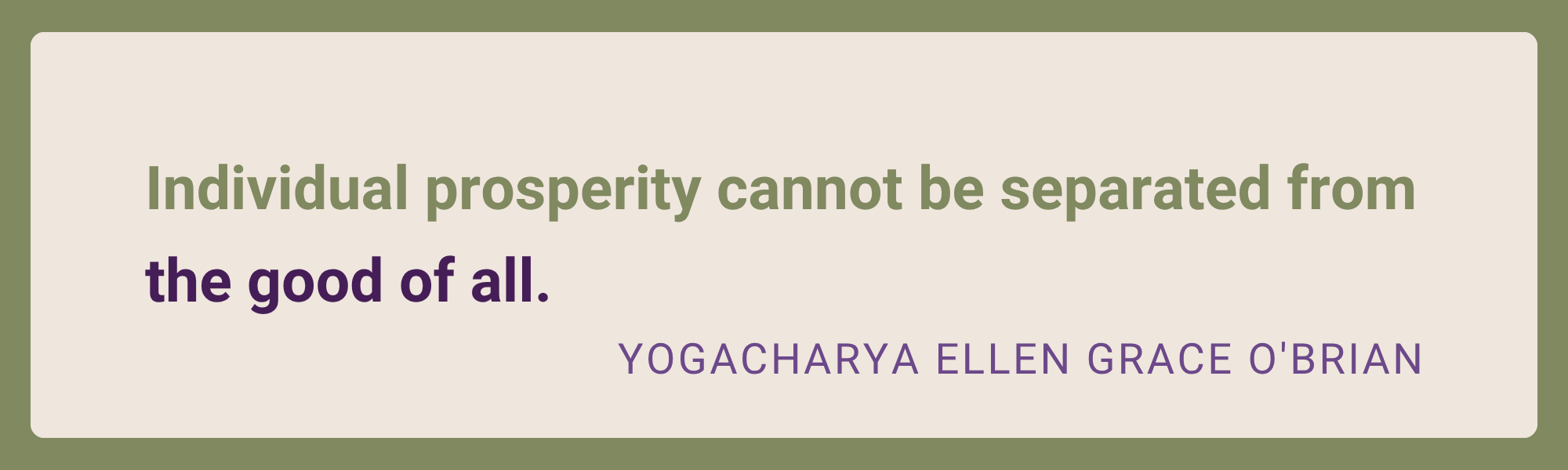
As a leader, how do you define prosperity? Is it merely financial success and organizational growth? Or does true prosperity encompass something deeper—a sustainable success that elevates not just your bottom line, but everyone your leadership touches?
I suggest it’s the latter: a broader view that sees the world as full of potential and opportunities rather than limitations and scarcity. Prosperity under this more expansive view is connected to purpose and brings with it financial health, goodwill and strong relationships. There’s substantial evidence to demonstrate the success of organizations that embrace this definition of prosperity. Here are two examples.
Consider the VP of a global team that I worked with. Let’s call him Bailey. Bailey’s commitment to fostering strong relationships draws people to him. He draws in the people and resources needed to exceed—not just fulfill—the team’s mission. One way he does this is by letting you know you are always part of his team, no matter where life takes you. His team members and everyone who knows him feel this strong connection, knowing they can rely on him. People are eager to work for him, and, in critical moments, Bailey can ask them to go the extra mile because his reputation and relationships are so strong.
Likewise, Satya Nadella’s transformation of Microsoft illustrates the power of a prosperity mindset. When he became CEO in 2014, he shifted the company’s focus from a competitive, scarcity-based mindset to what he calls “empowering every person and every organization on the planet to achieve more.” Under his leadership, Microsoft’s market value tripled, and the company simultaneously committed to becoming carbon negative by 2030, investing over $1 billion in climate solutions. This exemplifies prosperity leadership—thriving while serving a greater purpose.
The bottom line: leaders who embrace this broader definition of prosperity are creating more resilient organizations and sustainable value. They understand that true prosperity flows from principled decision-making, stakeholder-conscious strategies, and a mindset that sees opportunity where others see scarcity.
The New Paradigm of Prosperity
Think of your leadership journey as grounded in four fundamental pillars—Purpose, Prosperity, Joy, and Freedom. The first pillar, “purpose,” which we discussed in the last issue, serves as your “why.” The second pillar, “prosperity,” sustains your capacity to fulfill that purpose. Remember, prosperity isn’t the narrow pursuit of wealth for its own sake. It is the principled cultivation of resources that serve your purpose and contribute to the well-being of all, which includes organizational success.
Prosperity for leaders involves creating an environment of thriving. In this context, prosperity is measured by the collective growth, freedom, and well-being of individuals and organizations. It incorporates vision, ethical action, and a mindset that enables leaders and their teams to succeed. This approach leads to a unified perspective in which prosperity, in its truest sense, becomes an essential tool for effective leadership.
Leading with a prosperity mindset requires mastering three integrated dimensions:
1. Abundance mentality: seeing opportunity in every challenge
This shift in perspective can uncover innovative solutions that build rather than deplete resources and relationships, benefiting multiple stakeholders.
Create value that can be shared sustainably. Focus on expanding possibilities rather than just protecting resources.
Think expansively by asking, “How can we create more value?” rather than merely, “How can we cut costs?”
2. Skillfully managing resources: financial, human, and environmental
Attract everything needed to achieve your goals. View these resources as tools for fulfilling higher purposes rather than just meeting immediate needs.
Seek opportunities to maximize across all stakeholders, including employees, customers, suppliers, communities, and shareholders.
Develop systems and processes that minimize waste and maximize utility.
3. Talent Magnetism: Building Your Organization’s Gravitational Pull
As a prosperity-conscious leader, your ability to attract and deeply engage exceptional talent is a crucial competitive advantage.
Recognize that sustainable profit is fundamentally intertwined with developing and activating exceptional talent – both employees and partners – in service of meaningful purpose.
Foster practices that create a culture that deeply connects people to one another and to their higher purpose.
Cultivate an environment where talented individuals are naturally motivated to contribute their best work; don’t just manage talent—unleash it.
Fostering collective prosperity is both a strategic business approach and a personal development journey. This deliberate path to resource management, decision-making, and stakeholder relationships will ultimately determine not only your financial results, but the impact you have on everyone whose life you touch through your leadership.
I welcome your comments and questions. Share your thoughts. And if you’re interested in learning how coaching services can help you cultivate an environment of prosperity for yourself and your team, contact me for a free, 30-minute consultation.
In future issues, we’ll dive deeper into the Deliberate Path with practical strategies and insights, along with real-life examples from leaders I’ve worked with, to help you lead in today’s complex world.
Stay tuned!
To provide feedback or inquire about coaching services, click here.
If The Deliberate Path resonates with you, please share it with others.
